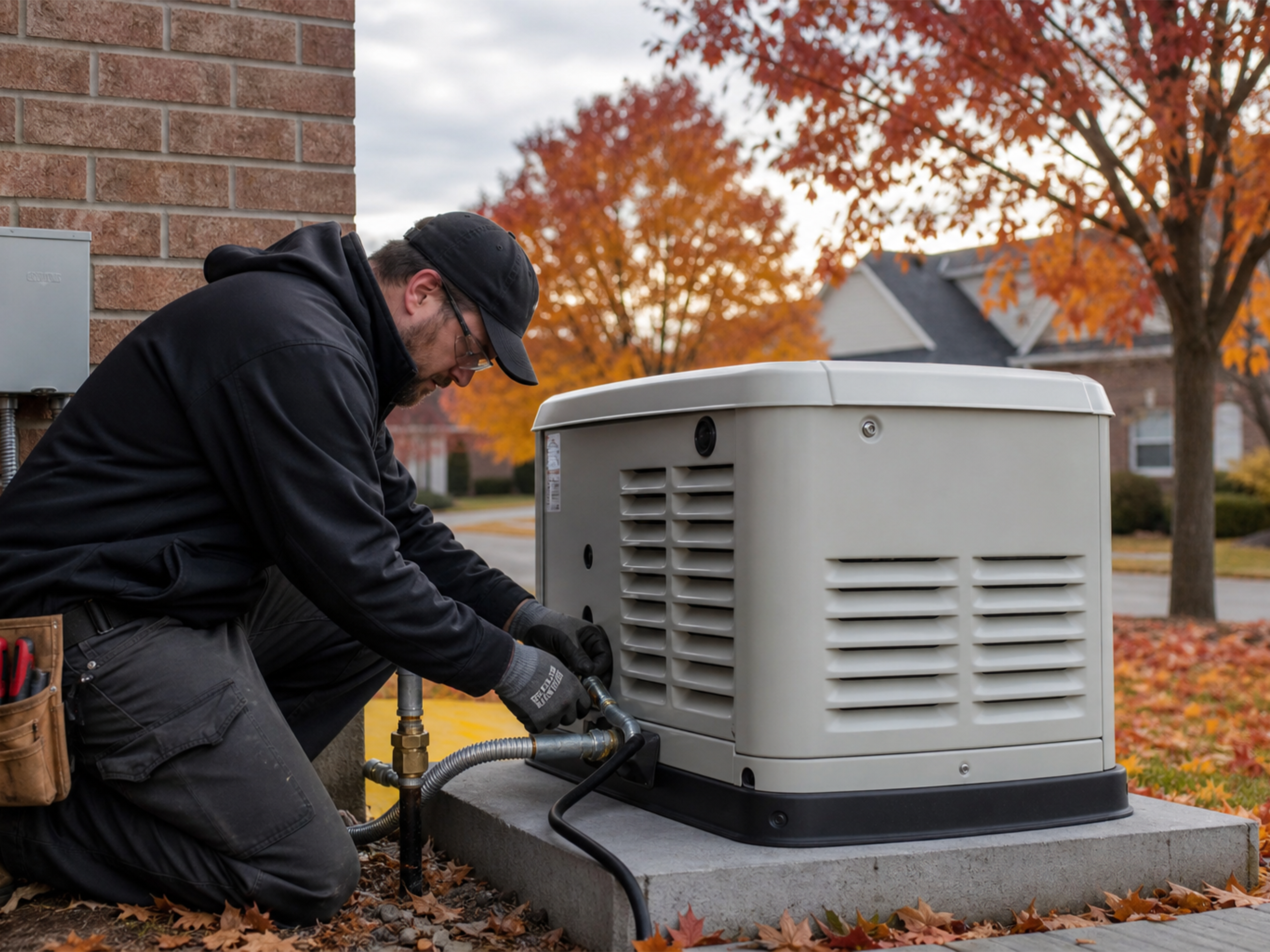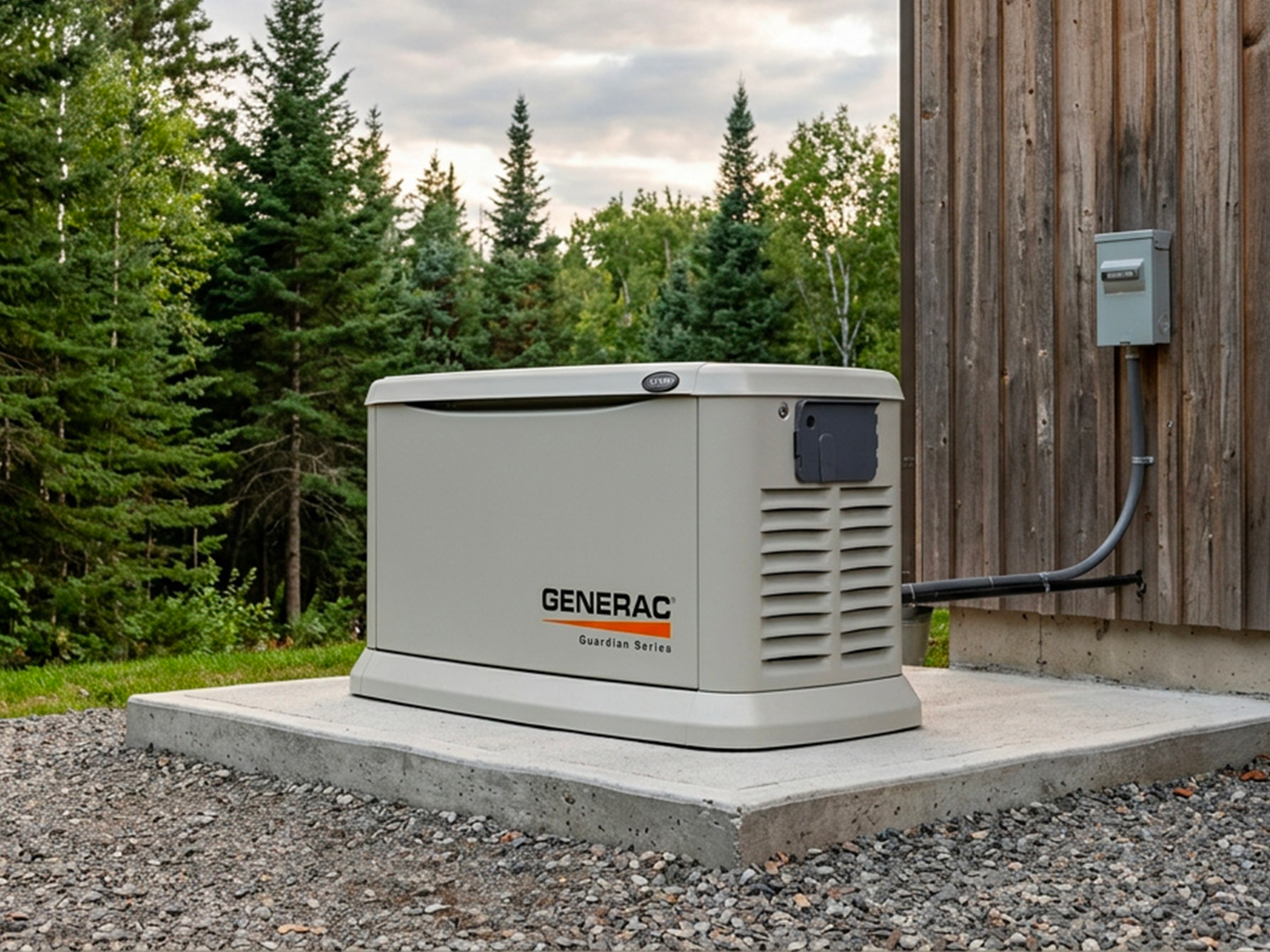
It’s 2 a.m., and an ice storm is hitting the Outaouais region. The power goes out. Yet, barely 30 seconds later, the lights come back on by themselves. No human intervention required. How is that possible?
The answer lies in a part little known to the general public: the automatic transfer switch.
In previous articles, we discussed the ideal location for the electrical panel in a new home and how to choose a residential generator that suits your needs. This time, we’re exploring the component that bridges these two pieces of equipment: the automatic generator transfer switch.
What is an automatic transfer switch?
A residential generator is never connected directly to the house’s electrical panel. The automatic transfer switch acts as a smart intermediary between the two. Its main role is to switch the house’s power supply between two sources: the Hydro-Québec grid and the backup generator.
This piece of equipment also fulfills an essential safety function. It prevents the current produced by the generator from flowing back into the public electrical grid. This protection, called a backflow preventer, ensures the safety of Hydro-Québec workers who are working on the lines during a power outage. The Quebec Construction Code also requires the installation of a transfer switch for any generator connected to a residence’s electrical panel.
How does automatic transfer work?
The operation of an automatic transfer switch for a generator takes place in four distinct stages:
Step 1: The switch continuously monitors the network voltage and detects the power interruption.
Step 2: It immediately sends a start signal to the generator.
Step 3: The generator starts and reaches its stable operating speed within seconds.
Step 4: The switch switches the house’s power supply to the backup generator.
When Hydro-Québec power is restored, the process reverses automatically. The switch detects that the grid is stable again, switches the power back to it, and then sends a shutdown signal to the generator. This entire sequence occurs without any human intervention, whether the occupants are present or not.
Automatic or manual switch: what’s the difference?
There are also less expensive manual transfer switches that require human intervention to switch between power sources. This option is suitable for portable generators used occasionally, but it has a significant limitation: you must be physically present at the time of the power outage to operate the switch.
Permanent residential generators, such as those from Kohler and Generac, systematically use automatic transfer switches. This configuration ensures complete peace of mind, especially during extended absences, vacations, or nighttime power outages. The backup power takes over immediately, protecting food in the refrigerator, the heating system, and sensitive equipment.
An installation that requires a certified professional
The installation of an automatic transfer switch must be carried out by a master electrician. The Quebec Construction Code sets out specific standards for this type of connection, and a municipal permit is required before work can begin.
A properly installed system not only ensures the correct operation of the backup power supply, but also meets insurance company requirements in the event of a claim. A non-compliant connection could invalidate certain coverages under your home insurance policy.
The switch size must also match the electrical panel capacity and generator power. A 200-amp switch is suitable for most homes, but some larger installations may require higher-capacity equipment.
VoltMax installs Kohler and Generac generators equipped with automatic transfer switches. Each installation complies with current standards and includes all necessary procedures with the relevant authorities.
To discuss your backup power project, contact us:
(819) 360-3215
entreprisevoltmax@gmail.com